
Co-Packing Guides
How co-packing works
What actually happens between handing over a recipe and seeing your product on a shelf. A plain-English walkthrough from a plant that has run it thousands of times.
A co-packer (short for contract packer, and often called a co-manufacturer) makes your product for you, in their plant, on their equipment, under their food-safety systems, with your name on the label. You keep the brand, the recipe, and the customers. They bring the kettles, the filling lines, and the regulatory infrastructure that would otherwise cost millions to build.
Step 1: The first conversation
Every project starts with the same three questions: What is the product? How much do you need? Where will you sell it?
You don’t need everything figured out, but the more you bring, the faster the conversation goes. The ideal starting package is a recipe (even a home-kitchen version), a rough annual volume estimate, and a picture of your distribution: farmers markets, regional grocery, national retail, or food service. A good co-packer will tell you quickly and honestly whether your product and volume fit their plant. If it doesn’t fit, ask them who it does fit; the industry is smaller than it looks, and honest referrals are common.
Step 2: Formulation and scale-up
A recipe that feeds twenty behaves differently at a thousand gallons. Sugars caramelize differently in a steam kettle than a saucepan. Fresh garlic and dried garlic trade places for consistency and food safety. Starches that thicken beautifully on a stovetop can break under production heat and pumping.
This is where food scientists earn their keep: adapting your recipe so it tastes like yours at scale. For shelf-stable products there’s a second, non-negotiable layer — the process itself. Hot-filled and acidified foods rely on heat and acidity (pH) to be safe without refrigeration, and the process for each product is validated and documented before anything runs. Expect bench samples, taste-and-tweak rounds, and sign-off on a final production formula.
Step 3: The first production run
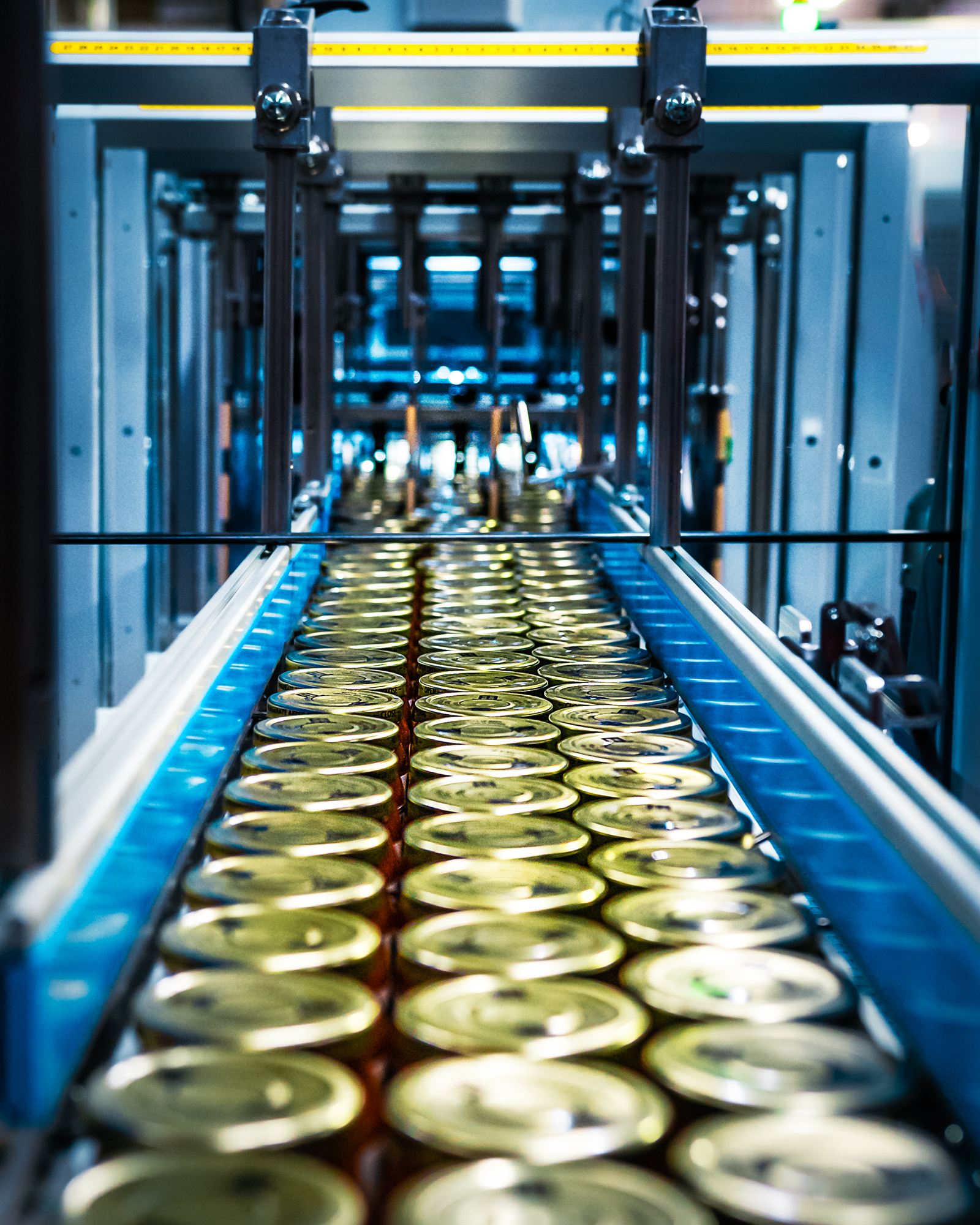
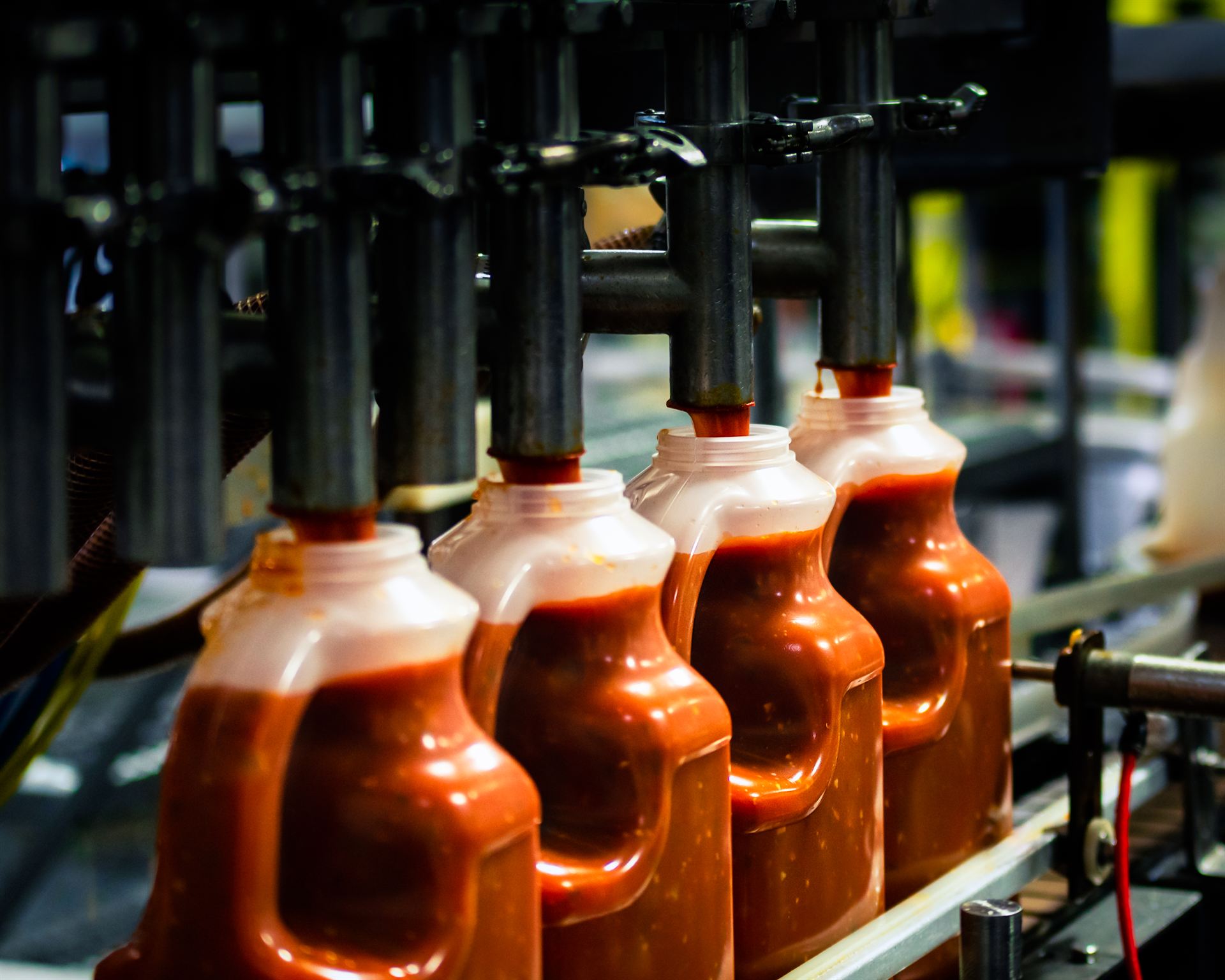
Once the formula is locked, the run gets scheduled. Your packaging arrives (or is sourced), labels are checked for regulatory compliance, and the batch is cooked, filled hot, capped, cooled, coded and cased. Quality checks run throughout — pH, fill weights, seal integrity, metal detection — and records are kept on all of it, because that paper trail is what retailers and auditors will ask for later.
First runs carry the most surprises, which is why minimums exist: a kettle, a crew and a changeover cost roughly the same whether the batch is large or small, so very small batches price themselves out. At our plant the minimum is 1,000 gallons per batch, with orders placed at least quarterly.
Step 4: Ongoing production
After the first run, co-packing becomes a rhythm: you forecast, the plant schedules, product ships. The best partnerships treat the co-packer like an extension of the brand’s own operations — sharing promotion calendars and growth plans so capacity is never a surprise. This is also where choosing a partner with headroom matters: switching co-packers mid-growth is expensive, so pick a plant your brand can’t outgrow quickly.
What co-packing is not
A co-packer manufactures. It does not (usually) sell, distribute or market your product — shelf placement, pricing, brokers and promotion stay with you. And at an independent co-packer with no house brands, your recipe stays yours: that separation is the foundation of trust in this business, and it’s worth confirming in writing with any partner you evaluate.
More from our co-packing guides
Ready for the real conversation?
Bring your recipe and your volume. We’ll respond within two business days, with straight answers.
Start a Project